
|
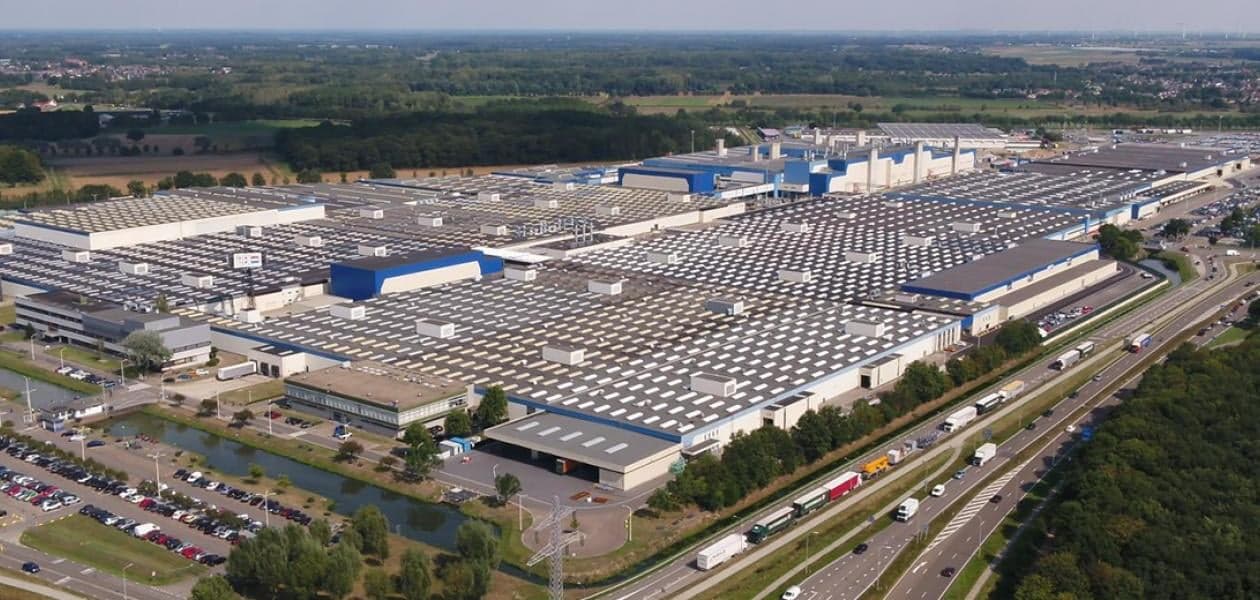
At VDL Nedcar in Born, hard work is underway to transition from independent car manufacturer to a broad partner in sustainable mobility. This transition aims to preserve as much employment as possible in Born, even after the contract period with BMW. Although VDL Nedcar has not yet been able to ensure a seamless integration of new activities at the end of the BMW contract period, there is confidence in VDL Nedcar's future.
The transition of VDL Nedcar is based on three pillars: VCM (Vehicle Contract Manufacturing), MIC (Mobility Innovation Centre), and VGA (VDL Growth Allocation).
VDL Nedcar is in discussions with various parties to produce cars for them in Born. The interest is concrete in several cases. There is confidence that a collaboration or contract can possibly be signed in the near future for the manufacturing of cars. This could involve a complete vehicle, or the final assembly of a partially assembled car or body shell. The expected start of production depends on the proposal. Joint efforts with these client(s) regarding the setup of the production could then commence soon.
The Mobility Innovation Centre (MIC) hosts a variety of sustainable mobility solutions. In addition to assembly for e-mobility, the MIC collaborates with partners on activities aligned with VDL Groep's broad mobility strategy: design, electrification, connectivity, autonomous driving, and systems.
VDL Groep has acquired Altran Automotive as of 1 May 2023. The more than 90 employees will remain to work at the Automotive Campus in Helmond. The activities will be integrated into VDL Enabling Transport Solutions, which focuses on partners and other VDL companies on researching, developing, building prototypes, and testing new opportunities and mobility concepts.
Altran is involved in vehicle and vehicle component testing, software engineering, prototyping of special vehicles, and special vehicle concept design. Additionally, the company has its own workshop with testing facilities and possesses expertise and skills in engineering and projects primarily focused on the automotive industry. Notably, Altran Automotive is the legal successor to the development department of NedCar.
With this acquisition, the engineering capabilities will be further expanded, making an important contribution to VDL Groep's mobility strategy. Additionally, there is a plan to utilise the knowledge and skills of the new employees in Helmond, as well as the testing facility, for future mobility concepts that also align with the transition taking place in Born, in order to further support employment at VDL Nedcar.
The battery assembly production line is in operation. The total built-up area of this line is 2,000 m2. The capacity is approximately 40,000 battery packs per year. VDL Nedcar is in discussions with car and bus manufacturers to have their batteries assembled in Born. These (potential) customers have an interest in the battery assembly taking place in the immediate vicinity of vehicle assembly. The battery assembly line is expected to contribute to the development of a battery ecosystem in the Netherlands, which will accelerate the transition to climate-neutral mobility. This is expected to create new jobs.
The European Commission, the executive branch of the European Union, has announced that brake emissions in Europe will fall under the EURO7 standard in 2025. Brakes are a major contributor to particulate matter emissions. There are several solutions available to reduce brake particulate emissions. An effective method is to hard coat the brake discs with laser cladding. The Wecodur technology offers an efficient and environmentally friendly way to do this, suitable for mass production and resulting in a reduction of particulate emissions by up to 90 percent. In addition to reducing particle emissions, the hard coating also decreases wear, thereby extending the lifespan of the brake disc. Moreover, the process protects the brake disc against corrosion and is therefore also suitable for electric vehicles.
GOTEC Brake Disc Coating (GBDC) is an innovative coating company offering Wecodur technology as a coating service. VDL has partnered with GBDC to coat brake discs at VDL Nedcar using this leading technology. It is estimated that by 2025, all car brands will have switched to coated brake discs, so the future market demand appears to be substantial. The technology and method of GBDC, as well as the production process, are proven innovations made available to the mass market. This way of coating brake discs aligns perfectly with MIC's strategy to bring innovations to the market.
Many urban areas actively combat the increase in motor vehicles by discouraging cars from city centres and promoting alternative traffic concepts. The automotive industry also addresses these challenges by developing new mobility solutions that connect connectivity, electrification, autonomous driving, and shared services. Consider autonomous shuttle systems based on a so-called ‘rolling chassis,’ which modularly combines the drivetrain, brakes, steering system, and battery. Depending on the power requirements, the vehicle can be powered using wheel hub motors or an e-axis.
By utilising partnerships for comprehensive vehicle integration and driving automation, complete vehicles for passenger and freight transport can be realised based on the rolling chassis of robottaxis to autonomous delivery vehicles. Complemented by intelligent infrastructure systems and connectivity options, extensive mobility solutions can be implemented.
VDL Nedcar is in discussions to collaboratively produce these so-called ‘people movers’. Positive steps are being taken to jointly bring an innovative transportation concept to market. If a partnership is established, we expect to announce it in the autumn.
The announced strategic partnership with ElectricBrands is taking shape. The German company plans to have the e-city car Evetta and the modular XBUS manufactured in Born. ElectricBrands has further expanded its engineering team and has sought collaboration with other VDL companies for the further development of its vehicles. VDL Kunststoffen in Nederweert is involved in developing and designing plastic components for the interior and exterior of the vehicles, and VDL HMI in Helmond is overseeing the steel structures of the vehicles to be produced in Born.
Another activity that VDL Nedcar has previously announced and is further developing is the preparation of vehicles for delivery before they go to market, known as pre-delivery inspections. This can include supporting aftersales activities for various car brands through inspections and repairs before handover, such as replacing the powertrain or camera systems, or providing training to dealers on how to handle electric vehicles. Because there is high demand in the automotive sector for service-oriented partners to carry out these projects, there is great confidence in further expanding this activity.
Different sister companies of VDL Nedcar, other companies that are also part of VDL Groep, are facing a lack of space, many vacancies, and sometimes a shortage of electricity. To facilitate their growth strategy, it is being considered whether these companies, which are initially also active in mobility, can be accommodated on the site in Born.
VDL Bus Venlo will start production on the VDL Nedcar site from 1 January 2024. With this move, this subsidiary will be separated from VDL Bus & Coach, the bus division of VDL Groep. This independence and the move to a larger premises (a tripling to 21,000 m2) will enable the growth plans to take shape. New jobs will be created to implement these plans.
VDL Bus Venlo is involved in converting various base vehicles into special vehicles for public transport, police, mobile units, recreation (campers), specials, and prototypes. After the relocation, VDL Bus Venlo will further develop on the site in Born into a specialist in vehicle modification and conversion, electrification of heavy vehicles, autonomous driving and contract manufacturing. The current premises of VDL Bus Venlo in North Limburg will be handed over to sister company VDL Parree in Sevenum.
The activities of another subsidiary of VDL Group, VDL Special Vehicles in Eindhoven, can roughly be divided into two segments. On one hand, activities as a supplier of chassis for VDL Bus & Coach. On the other hand, a portfolio is being developed in the field of assembly of battery electric and hydrogen solutions for heavier vehicles, which are used in road transport, construction, ports, for Defence, and at airports.
After constructive consultations with the works council and trade unions, an agreement has been reached to incorporate the Bus & Coach activities of VDL Special Vehicles into VDL Bus Valkenswaard. The remaining production-related activities will then be transferred to VDL Bus Venlo, which will be renamed VDL Special Vehicles after the move to Born.
Based on the activities currently in the pipeline, it is estimated that the employment at the new VDL Special Vehicles in Born will have grown from approximately 120 employees to around 500 employees within a few years. The premises of the current VDL Special Vehicles in Eindhoven will gradually be repurposed for the sister company VDL ETG.
Due to the high demand in the market for electric public transport, and the positive reception of the new electric city bus VDL Citea, a huge demand is expected from 2024. To meet this demand, and to support the employees of VDL Bus & Coach in Valkenswaard and Roeselare (Belgium), to be examined whether this support can be provided from Born.
Since VDL Group took over NedCar in 2012, VDL Groep has invested 460 million euros in VDL Nedcar. Investments include physical and social safety in the factory, canteens, overdue maintenance, production improvements, automation & robotisation, and safety. The recent period has also seen significant investments, for example in buildings and sustainability. Additionally, new investments are planned. These again involve millions of euros.
Last year, a hall was extended by 22,000 m2 and another hall (20,000 m2) was added. Recently, concrete floors have been poured in these new buildings, and this year investments are planned to prepare the first hall for the production of the new VDL Special Vehicles. These investments in and around the buildings amount to approximately 60 million euros.
In the sustainability efforts at the VDL Nedcar site, significant investments are being made and continued. The investments in an e-boiler, which reduces the costs of heating the buildings, solar panels, charging stations, and charging points for electric vehicles amount to approximately 6 million euros.
If nearly 25,000 solar panels are installed in total by the end of this year, the expected annual yield is estimated at approximately 8.5 million kWh (kilowatt-hours). Assuming an average consumption of 17 kWh per 100 kilometers, this annual yield could power 3,333 electric cars for a year.
Through our strength through collaboration, we work together towards the future of sustainable mobility.
Communications Director and spokesperson for VDL Groep
E: m.timmers@vdl.nl
Tel: +31 6 14767066
Are you a journalist interested in our work, or would you like to focus on VDL Groep for another reason?
Then please contact us.