
VDL Groep and Airbus join forces around laser communication terminals for aircraft
January 10, 2023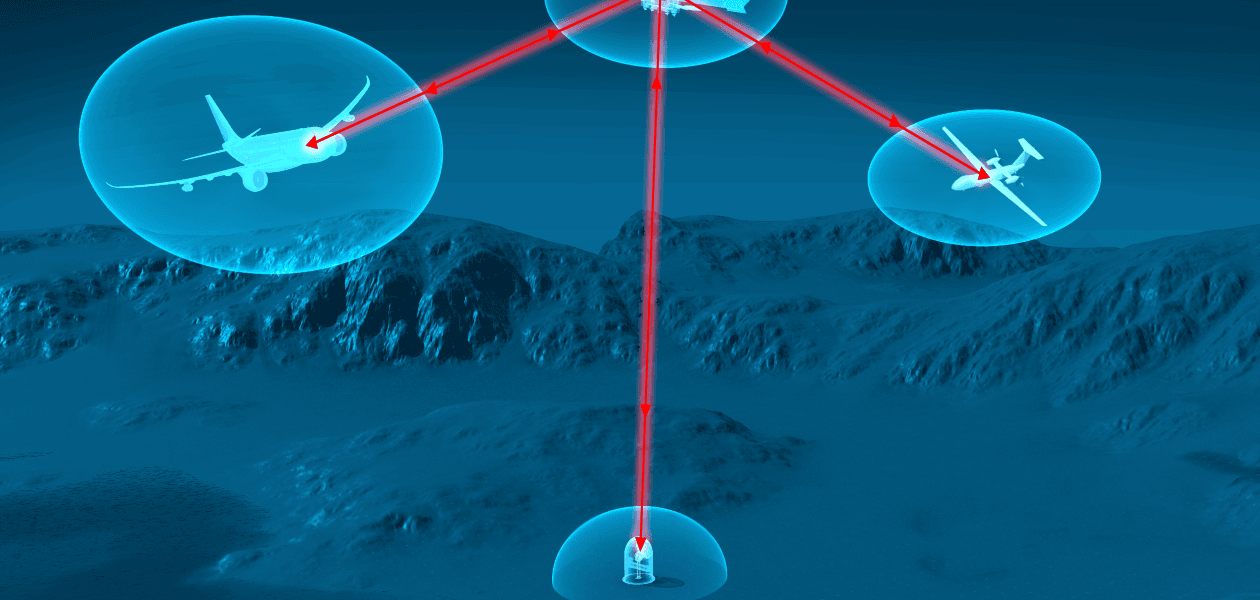
Airbus and VDL Groep are collaborating in the development and production of so-called laser communication terminals for aircraft, called UltraAir. The project begins with the development and production of a prototype. An initial test flight is scheduled for 2024. This builds upon the development initiated by aerospace company Airbus and research organisation TNO.
The UltraAir equipment makes it possible to exchange large amounts of data using laser links, within a network of ground stations and satellites orbiting 36,000 kilometres above the Earth. With advanced technology, including an extremely stable and precise opto-mechatronic system, transfer speeds of gigabits per second can be achieved thanks to laser communication terminals, while interference is minimized and the likelihood of interceptions is low.
Connection
In this way, UltraAir ensures that military aircraft and unmanned aerial vehicles can connect, making use of laser-based satellite constellations, such as Airbus's so-called SpaceDataHighway network. In Airbus's strategy to further develop laser communication, this represents an important step that highlights the distinctive advantages for government and defense customers in multidisciplinary collaboration. In the longer term, UltraAir could also be applied in commercial aircraft to enable passengers to establish fast data connections.
Next revolution
As a solution for data traffic in the quantum era, laser communication technology is the next revolution in satellite communication (satcom). Due to the growing demand for satellite services, the limits of traditional radio frequency capacity for satellite communication are being reached. However, laser satellite communication makes it possible to process a thousand times more data, at a factor of 10 faster than the current network. Laser connections also offer the advantage of being less affected by interference and potential detection. Unlike the already overcrowded radio frequencies, laser communication is difficult to intercept because the beam is narrower. Laser satellite terminals are therefore more compact and lighter, consume less energy, and are more secure than radio connections.
The collaboration between Airbus and VDL includes the development of a demonstrator model and prototype of UltraAir, as well as the necessary follow-up steps to produce UltraAir in volume. VDL ETG Almelo will be responsible for the production and will also supply critical systems among other things. Airbus will subsequently bring UltraAir to market.
Added value
"As a high-tech supplier and partner for companies, especially in the semiconductor industry, we see a lot of added value in tackling the challenges of this project for Airbus," states director Sander Verschoor of VDL ETG Almelo. "To produce these complex terminals, which are equipped with mirrors and motors and are fitted with mechatronics and optics, in volume, we will be closely involved in the development of the technology from the start. For example, we apply our system architecture and design competencies here. Naturally, we work intensively with other partners, such as Demcon and TNO."
Investments
Airbus and VDL Groep will take further steps in 2024 towards the industrialisation of the prototype to prepare the laser communication terminal for integration with an aircraft. A test flight of the industrialised prototype on an aircraft is planned for 2025. The development of UltraAir is made possible through investments from Airbus and VDL Group and is supported by the ESA ScyLight (Secure and Laser Communication Technology) programme and the awarded Growth Fund proposal NxtGen Hightech, led by TNO and a group of Dutch companies.

Miel Timmers
Communications Director and spokesperson for VDL Groep
E: m.timmers@vdl.nl
Tel: +31 6 14767066
Discover VDL Groep
Are you a journalist interested in our work, or would you like to focus on VDL Groep for another reason?
Then please contact us.