
|
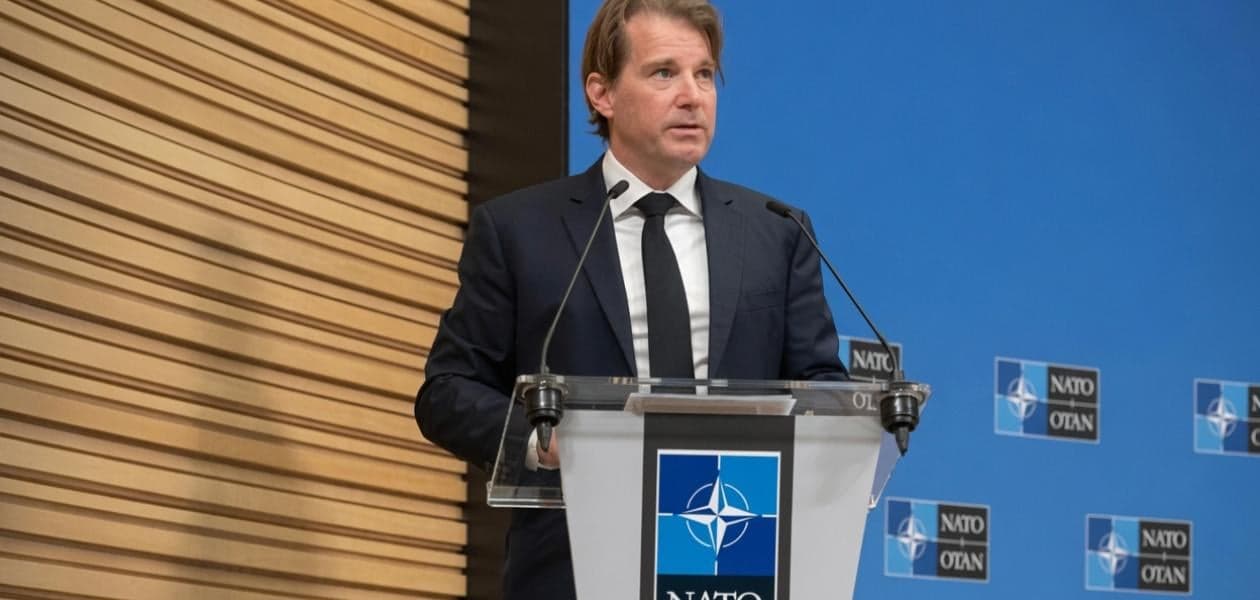
On Wednesday 24 June, Willem van der Leegte delivered a keynote speech at the launch of the first Benelux Defence Industry Day. The event took place at NATO headquarters in Brussels.
Below is the full version of the speech.
Good morning, everyone, distinguished guests,
It is a privilege to be here today and briefly share my perspective with you.
We live in turbulent geopolitical times. One crisis follows another, and uncertainty is increasing. While society and businesses seek stability and predictability, European governments are calling for greater resilience.
We can do this.
The ambition is right. What is missing is a well-coordinated implementation strategy. Without one, the outcome remains uncertain.
Leaders of major powers outside Europe are increasingly running their countries with a business mindset. This approach is fundamentally strengthening and changing global competitiveness. Europe is generally only slowly emerging from its state of denial.
Competitiveness will be the greatest global challenge of the coming decades. It should therefore be our top priority in Europe.
The United States is repositioning itself in relation to Europe. This may feel like a shift in friendship, but it is fundamentally about economic interests. Recent developments have made this very clear. Defence as a means of achieving economic prosperity has almost been elevated to an art form.
Our relationship with the United States can still be described as that of allies. However, we increasingly see each other as competitors. Europe remains dependent on the US in several crucial areas. These include security, defence and high-tech services, such as digital infrastructure, artificial intelligence and cloud computing.
China, on the other hand, presents a different kind of paradox. It is both an important trading partner and a systemic rival. European consumers are becoming increasingly dependent on this ‘factory of the world’. In addition, Europe currently imports up to 98% of the critical raw materials and essential components used for innovation, such as future energy solutions, from China.
Given this dependence on both the US and China, there is only one way forward:
Structural and coordinated European cooperation.
Cooperation in foreign policy, defence policy, energy policy and industrial policy. More precisely: innovation policy.
I would add that, on principle, I support open markets and a level playing field. The US is systematically raising import tariffs, while China continues to flood our market with cheap goods. We must be prepared to take countermeasures.
Without these measures, a so-called ‘China shock 2.0’ could leave deep and lasting scars. If we stop producing ourselves, we will lose knowledge. Capital will eventually follow. The consequences are already being felt across industry. We simply cannot afford to lose time.
Business costs in the Benelux are reaching extreme levels. Labour and energy costs are among the highest in the world. Combined with increasingly complex and costly regulations, this is putting growing pressure on our competitive position.
Many of these challenges come down to a simple principle: when supply falls relative to demand, prices rise.
The common denominator is scarcity. Over recent decades, we have allowed these shortages to accumulate instead of addressing them: energy, housing, emission allowances, water, industrial sites, talent, etc.
These challenges have existed for a long time. They were predicted, but not addressed sufficiently.
Ultimately, our greatest scarcity may well be a lack of decisiveness.
And our governments cannot solve this on their own.
That is why strong cooperation between governments, knowledge institutions and businesses is essential.
Europe’s greatest strength lies in our values: our human rights and democracy. However, we lack the strategic power to defend these values adequately. This makes us vulnerable. We have also learnt that diplomacy without strength is ineffective. Europe is becoming a paper tiger – one without teeth.
Although these important values do not always lead to quick decisions or an immediate competitive advantage, they are fundamental and must always be protected.
Objectively, Europe is a global power: the EU has the world’s second-largest population and economy, combined with a relatively low debt burden.
However, geopolitically, we face challenges. This is largely because we still feel and act weak on defence, despite having the world’s second-largest defence budget. The real problem is therefore not its size, but fragmentation and a lack of cooperation.
Our spending is too fragmented and driven by national interests. The United States is developing one main platform for battle tanks; Europe has more than ten. Although we are making progress with cooperation, major initiatives have failed because of irreconcilable differences. One example is the FCAS fighter aircraft project between Germany, France and Spain. The most likely result is greater dependence on the US, not less.
The EU is heading towards an additional €800 billion in annual defence spending. Around 30% will be spent on equipment. Around 80% of this equipment is purchased outside Europe, with 80% of that coming from the US.
In practice, this means that more than €150 billion flows into the US economy each year. This is equivalent to several million jobs.
This alone is reason enough to urgently build our own European defence industrial base. In recent decades, we have effectively used too much of our ‘peace dividend’ without reinvesting enough in strategic capabilities.
In 2025, the former Dutch Minister of Defence described VDL Groep as ‘the flagship of renewed cooperation between defence and industry’.
And indeed, our industries can adapt. Transformation is possible. We have proved this ourselves by moving from bus production to industrial housing modules, and from car manufacturing to products for defence, for example.
When we talk about ‘dual-use’, we often think in terms of products: civilian versus military applications. The real strength lies in the dual-use of capabilities. The ability to quickly shift production from civilian to defence and back again, across different sectors, creates true resilience. Today, we produce cars; tomorrow, we could produce drones, for example.
Innovation is naturally an essential part of the solution. Staying ahead through renewal and progress is the best way to remain relevant. It also helps create a level playing field with the rest of the world.
Investing in innovation means investing in resilience.
Governments urgently need to invest in infrastructure, talent development and entrepreneurial ecosystems. Political courage is needed to make difficult but necessary decisions.
Innovation and entrepreneurship go hand in hand with taking initiative and risks. They require creativity, problem-solving skills, perseverance and vision. They involve creating value and taking responsibility. Above all, they are about Strength through Cooperation. Only together can we succeed.
That brings me back to the key message:
Coordinated European cooperation is essential.
Who is better placed to accelerate this cooperation, particularly in defence? The Benelux, of course.
So, it starts with us.
History has shown this time and again.
Despite their relatively small populations, Belgium, the Netherlands and Luxembourg have had a disproportionately large influence on Europe.
We were pioneers of the customs union. The free movement of goods, people, capital and services later became the basis of the EU.
The 1958 Benelux Treaty was the testing ground for Schengen and the internal market. Because it worked here, Europe dared to apply it on a larger scale.
History shows that further European integration often begins with the Benelux. When France and Germany hesitate, the Benelux countries and Scandinavia often form ‘a coalition of the willing, a coalition of the doing’.
Now is the right time to take the lead again.
We need stronger alignment and cooperation on foreign policy, energy, industry, innovation and defence. With clear agreements and clear coordination.
The first steps are being taken, but I urge everyone here – and policymakers in our home countries – to develop an integrated Benelux defence strategy.
A concrete plan that answers key questions: who buys what, who produces what, and how do we fit the pieces together?
Today’s reality demands urgency and speed. Legal complexity must not cause delays when our safety and freedom are at stake.
At a time when geopolitical competitors increasingly use defence as an economic instrument, we must protect our prosperity, wellbeing and future earning capacity.
In the Benelux, we are pragmatic and focused on results. We generally avoid grand moral statements without practical implementation.
We prefer to prove rather than promise.
This is a call for real action, because vision without execution is also known as: hallucination.
I wish you an inspiring day.
Thank you for your attention.
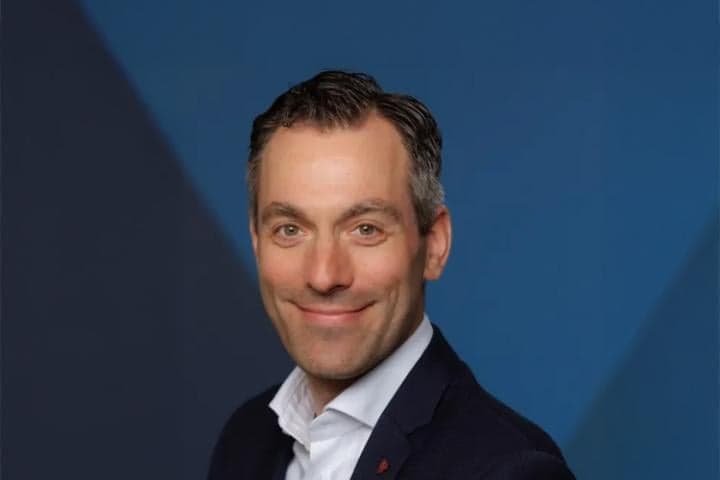
Communications Director and spokesperson for VDL Groep
E: m.timmers@vdl.nl
Tel: +31 6 14767066
Are you a journalist interested in our work, or would you like to focus on VDL Groep for another reason?
Then please contact us.